Render respray and colour changes in Hucknall
Render respray and colour changes in Hucknall
Changing the colour of a sound wall can be a separate project from replacing its render. The existing finish and any old paint layers determine whether a new coating is appropriate. Before selecting a shade, establish what is being coated and what preparation is needed, especially where roughcast has already been painted more than once.

On this page
Identify the layers that will remain
Look for records of the original render and previous coatings. If they are unavailable, the inspection should describe what can be established and what needs further checking. A textured surface does not reveal every layer beneath its colour. Different generations of paint or repair can have different adhesion and compatibility with the proposed treatment.
Ask whether the coating supplier supports the intended application on that background. A general exterior-paint description is not enough to establish suitability. The proposal should name the product and required preparation, including any primer or repair treatment. If a trial is needed, agree its purpose and how the result will be judged before the whole wall is treated.
Render repair should deal with defined defects in the underlying material before coating. Wall rendering may be necessary where a retained covering is broadly unsuitable. A colour change should not be used to conceal loose render or unresolved movement. Keep those alternatives visible so the decorative project is based on a wall that can actually support it.
| Question | Evidence needed |
|---|---|
| What is on the wall? | Existing finish and coating history where known |
| Can it remain? | Condition and compatibility assessment |
| What does cleaning reveal? | Post-preparation inspection |
| Will patches show? | Sample including a repaired area |
| How is it applied? | Product method and protection plan |
- Clean Washed down, with algae and mould treated and left to work.
- Repair first Cracks and hollow patches are repaired before any coating.
- Prime or stabilise Where the coating maker requires it on that surface.
- Coating Usually two coats of a breathable masonry or silicone coating.
The usual order of work. The survey and the chosen products decide the actual steps.
Check the old coating rather than painting over its failures
Flaking, chalking and weak patches need investigation and suitable preparation. Record their distribution across the elevation. One clean area beside an entrance may not represent a more exposed upper wall or a repeatedly wetted section below a gutter. Any adhesion assessment should state its location and limits, with further investigation where the condition differs.
Cleaning can reveal weaknesses that were hidden by dirt. Agree how the surface is reassessed after preparation and what happens if the original retention assumption proves wrong. The programme should allow that decision before coating materials are applied. An initial estimate based on photographs may need a confirmed scope once the actual condition is visible.
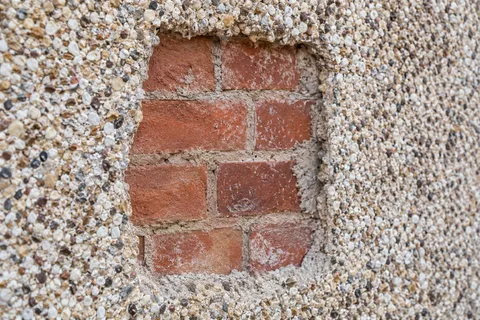
Pebbledash removal remains a different operation. It may be appropriate where the covering itself is unwanted or unsuitable, but it is not automatically required for every colour change. Compare the objectives carefully: a coating generally retains the underlying texture, whereas replacing the covering can change the surface character as well as its colour.
Use a cleaning method suited to the finish
The cleaning approach should follow the existing material and the selected coating requirements. High pressure or strong chemicals are not universal solutions for a stubborn mark. They can damage texture, affect adjoining surfaces or introduce water at vulnerable details. Ask what method is proposed and how a trial or inspection will establish its suitability.
Repeated staining may have a source beyond surface dirt. Check relevant gutters, sills, downpipes and attachments as part of the assessment. A coating cannot correct a fitting that continues to wet the wall. Include the associated repair and its timing in the project so the new colour is not immediately exposed to the unresolved cause.
Drying conditions matter after cleaning and repairs. Follow the chosen product guidance and the actual wall condition rather than assuming a fixed interval suits every elevation. The contractor should explain how readiness is checked and how weather interruptions affect the planned application. A wall should not be coated simply because the next available visit has arrived.
Decide what repairs will look like under the colour
A patch can have a different profile or texture from the surrounding finish. Coating it may change the shade without hiding that physical difference. If the appearance matters, review a sample that includes a representative repair. An untouched area showing the new colour alone does not demonstrate the final result across repaired sections.
Traditional lime-rendered walls need a compatible decorative approach. Lime rendering guidance explains the importance of the underlying material and moisture behaviour. Do not apply an unrelated coating simply because it is marketed for masonry. The person specifying the treatment should account for the existing system and any heritage requirements relevant to the address.
An insulated render system also needs suitable repair and recoating advice. Keep its original product and maintenance records available if possible. The outer surface may resemble conventional render, but its care and alteration requirements can depend on the layers beneath. A coating proposal should identify those layers rather than assuming every wall is the same construction.
View colour and texture together on the building
Approve the dry colour beside the retained roof, frames, brick and other finishes. The same shade can look different on a shaded side wall and a bright frontage. A sample should help you understand that effect, not promise an identical visual impression in every light. Record the precise product and colour reference after approval.
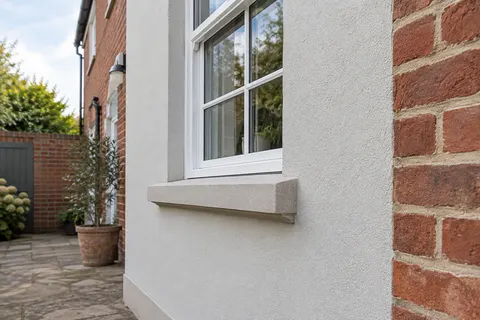
If the aim is a much finer texture, consider whether a coating can achieve the intended result. Silicone rendering may offer a different surface under a supported new build-up, but that is a separate scope with its own preparation. Do not buy a colour treatment expecting it to level coarse roughcast into an entirely different finish unless the specification explicitly supports that result.
For phased work, choose suitable boundaries and discuss future matching limitations. New colour beside an older retained surface may be intentional, but it should be considered before application. Keep sample approval and product records so a later phase has a reliable starting point beyond a photograph taken under different light.
Agree the method and the protection plan
Spray, brush or roller application should suit the product and site, rather than being treated as a guarantee of a better result. Spraying needs appropriate protection for glazing, vehicles, planting and nearby property, with conditions suitable for the method. Ask how masking is checked and who removes it without damaging the protected surfaces.
Commercial rendering and maintenance projects can require phases around entrances and deliveries. The same practical issue can occur at a house with a narrow shared route. Keep access arrangements clear through preparation, application and clearance. At handover, record what was cleaned, repaired and coated, with the maintenance guidance needed to care for the new surface.
Common questions
Will another coat make roughcast smoother?
A colour coating usually retains much of the underlying texture and can leave repair profiles visible. Review a representative sample before agreeing the result. If a fundamentally different texture is wanted, compare a supported new finish system with its own preparation requirements rather than expecting an unspecified levelling effect from paint.
See housing and planning information for Hucknall and nearby places, including the source and geography behind each figure.