Check painted roughcast before changing its colour
Check painted roughcast before changing its colour
A roughcast wall can retain its texture through several colour changes, while the history of the coatings becomes less clear. Before adding another layer, establish what is sound, what is peeling and whether the underlying render is suitable to keep. The new shade is the last part of that decision, not the evidence that the wall is ready.

On this page
Gather the coating history without inventing it
Look for earlier product records, invoices or photographs that identify the render and later coatings. They can help the surveyor understand the surface, but treat incomplete information honestly. A previous owner remembering that the wall was painted does not establish the exact product or preparation. Record what is known and what needs investigation.
Map changes in colour, gloss, texture and patching across the elevation. A side wall may have received different treatment from the front, even if the current shade looks similar. The proposed coating needs to suit the surface actually present. One successful test in an untouched corner cannot establish compatibility across a wall with several repair histories.
Render respray is a useful service category for a colour-change proposal, but the method needs to follow the chosen product and site. Spraying does not bypass preparation. A quotation should separate cleaning, adhesion assessment, repairs and application so you can see how the retained layers have been considered before another one is added.
| Layer or issue | What to establish |
|---|---|
| Existing coating | History, soundness and compatibility |
| Underlying render | Attachment, damage and repair needs |
| Background cause | Relevant water or movement issue |
| Appearance | Texture retained beneath the new colour |
| Records | Preparation, products and care guidance |
Distinguish coating failure from render failure
Flaking paint can occur over render that remains attached, while a tidy painted surface can conceal detached material underneath. The inspection needs to consider both. Do not judge the entire wall from how easily a visible flake lifts. The surveyor should identify the relevant checks, their locations and the limits of any assessment made without high-level access.
Render repair may be required where the underlying finish is damaged. The repair material and curing must suit the existing system and proposed coating. If broad areas are unsuitable to retain, wall rendering may be a more appropriate scope. Compare those options on the actual condition rather than assuming another colour layer is always the least disruptive complete solution.
If loose material threatens a route or entrance, arrange a competent assessment and the appropriate precautions. That issue should be addressed separately from the decorative preference. A colour-change programme is not a substitute for dealing with material that may fall. Avoid improvised testing or removal from unsafe access while trying to prepare photographs for an estimate.
Let cleaning inform the final preparation scope
Cleaning should follow a method suitable for the existing finish and the proposed system. Ask how contamination is removed without unnecessary erosion or damage to adjacent surfaces. Stronger chemicals or greater pressure are not automatically the right response to a persistent mark. A trial may be useful, with its effect on the texture and coating recorded.
After cleaning, inspect the wall again. Dirt can mask weak coatings, cracks or uneven repairs. The proposal should say how a changed condition is reviewed before application. If the original estimate assumed a sound surface, the confirmed scope needs to reflect what preparation has actually revealed. Do not proceed simply because the colour has already been ordered.
Allow the wall to reach the condition required by the selected coating. Drying depends on the material and circumstances, so an arbitrary fixed interval may not suit every elevation. The contractor should explain the readiness check and the arrangements for unsuitable weather. This protects the sequence from being driven entirely by a diary slot rather than the wall.
Investigate recurring marks before covering them
Follow stains upwards and sideways in the survey to consider relevant fittings and junctions. A defective gutter or concentrated runoff may explain repeated wetting, but the diagnosis needs the appropriate assessment. Record the associated work separately from cleaning and coating. The new colour should not be expected to compensate for a leak that remains in place.
Surface growth also needs a suitable treatment and an understanding of conditions that may encourage its return. Do not promise that one cleaning or coating operation will remove every future maintenance need. Follow the relevant product guidance and correct avoidable defects. Keep the explanation specific to the inspected wall rather than making broad claims about every shaded elevation.
Where the render is part of external wall insulation, use the system's care and repair guidance. The visible rough texture may not reveal the layers behind it. Damage and later coatings should be assessed with those layers in mind. Retain any original system records and seek the relevant advice if the construction is uncertain.
Approve what the coating will actually change
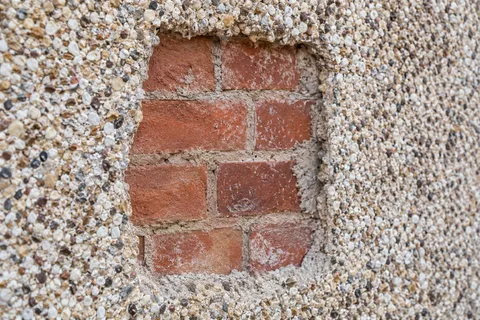
A new colour can leave the existing texture, profile and repair edges visible. Review a dry sample that includes representative roughness and, where relevant, a repaired area. An untouched smooth patch of the old wall is not an adequate demonstration of how a coarse repaired section will look after coating. State the intended result clearly.
If a finer surface is wanted, compare a supported new finish rather than expecting colour alone to level the wall. Silicone rendering may be one suitable option after appropriate assessment and preparation. Pebbledash removal and replacement is another distinct route where justified. Each has a different scope, disturbance and background requirement; they should not be presented as interchangeable ways to apply a shade.
Lime rendering or an existing traditional finish needs a compatible decorative approach. The coating choice can affect the material behaviour that the original specification was intended to preserve. Ask the specifier to identify the relevant finish and support its use on the actual wall. A product being labelled suitable for masonry does not answer every compatibility question.
Keep the sample location representative of the work you intend to approve. If the wall has both older roughcast and a recent smooth patch, show those differences rather than choosing only the easiest area. Mark the sample and retain its preparation record. If additional cleaning or repairs are later required elsewhere, review whether the original sample still represents the finished result or whether a further trial is needed for the changed surface.
The approved colour should also be identified in the final product record, with any relevant batch information supplied by the contractor. A tin lid or phone photograph can be lost or misread. Store the reference beside the cleaning and care instructions so a later decorator understands both the shade and the system it belongs to. Colour matching on its own does not establish that a different coating is compatible with the existing wall.


Keep application and handover specific
Agree protection for frames, paving, planting, vehicles and nearby property. If spraying is proposed, the method and conditions need to suit the site and product. Define who moves belongings and who removes protection afterwards. The work should not improve the wall colour at the expense of damage or overspray to surfaces that were meant to remain unchanged.
At completion, record the cleaned and repaired areas, products and colour reference. Keep the preparation findings with the maintenance instructions. Those records help the next survey distinguish the retained original roughcast from later repairs and coatings. They are more useful than a photograph whose colour may be altered by lighting and screen settings.
The Hucknall rendering services guide links coating, repair and replacement options. Use the surface assessment to decide which applies. A well-prepared colour change starts with a wall that can support it and a realistic agreement about texture, matching and maintenance, rather than treating a fresh shade as proof that every underlying issue has been solved.
Common questions
Is spraying better than brushing or rolling?
The suitable method depends on the product, surface and site. Preparation and compatibility remain necessary whichever method is used. A spray proposal also needs appropriate conditions and protection of neighbouring surfaces. Compare the complete method rather than treating the application tool as proof of a better result.
See housing and planning information for Hucknall and nearby places, including the source and geography behind each figure.